


There’s something about being deep in the wilderness that makes turning around feel like defeat. You’ve spent weeks planning your adventure, hundreds or even thousands of dollars getting there, and hours hiking toward your destination. Maybe you’ve dreamed about standing on that particular summit for years. Then the weather starts changing, daylight is disappearing, or someone in your group is struggling to keep up. You know things aren’t going according to plan, but there’s that little voice in your head telling you to keep going. After all, you’ve already come this far.
Unfortunately, that kind of thinking can get you killed. I’ve spent years teaching wilderness survival, and one of the things I try to get students to understand is that surviving isn’t simply about knowing how to build a shelter, start a fire, or find something to eat. Those are valuable skills, but they’re not going to do you much good if your decisions put you into a situation you can’t get yourself out of. Sometimes the smartest survival decision you’ll ever make is recognizing when your original plan has become a bad idea. That is the thinking behind tip 62 in my 81 Basic Survival Tips, letting the plan change with the facts.
The problem is that recognizing danger and actually doing something about it are two very different things. Human beings have an incredible ability to justify their decisions, especially when they’ve invested considerable time, money, or effort into achieving something. We convince ourselves that conditions aren’t quite as bad as they appear, that the destination is just a little farther, or that things will somehow work themselves out. Unfortunately, spending thousands of dollars and months preparing for an adventure doesn’t make deteriorating weather or dangerous terrain any less hazardous.
Understanding the Sunk Cost Trap
There’s a psychological phenomenon known as the sunk cost fallacy. It’s the tendency to continue investing in something because of what we’ve already put into it, even when continuing is no longer the best decision. In everyday life, it might mean sitting through a terrible movie because you’ve already watched the first hour, or continuing to pour money into a failing project because you’ve invested so much in it. In the wilderness, however, that same thinking can have far more serious consequences.
Imagine you’ve traveled across the country for a once-in-a-lifetime backpacking trip. Maybe securing the permit required entering a lottery, and you were lucky enough to get one. You’ve purchased expensive equipment, arranged time off work, paid for transportation, and spent months preparing. When you finally reach the trailhead, the forecast is questionable, but you’ve come too far to simply turn around and go home. You convince yourself that the weather will probably hold, and off you go.
Several hours later, things start deteriorating. The temperature drops, clouds move in, and what was supposed to be a beautiful adventure is becoming increasingly uncomfortable. You’re still several miles from your destination, but turning around means abandoning something you’ve worked hard to accomplish. Instead of evaluating the conditions objectively, you start thinking about everything you’ve sacrificed to get there. The decision is no longer based entirely on what lies ahead. It’s being influenced by everything you’ve already invested.
That’s where things can get dangerous. The money is already spent, the vacation time is already gone, and the miles you’ve hiked are already behind you. None of those things make the terrain safer or improve the weather. Yet they can become powerful reasons to continue, even when the evidence is telling you to do something different.
When Determination Becomes a Liability
I’m a firm believer in perseverance. There’s tremendous value in pushing yourself beyond your comfort zone, working through difficult situations, and learning what you’re capable of accomplishing. In fact, that’s a significant part of what we teach in our 50 Day Wilderness Immersion Program at The Survival University. However, there’s an enormous difference between pushing through discomfort and continuing into an increasingly dangerous situation because you’re too stubborn to change your plans.
Being cold, tired, hungry, or uncomfortable doesn’t automatically mean you’re in a survival emergency. Those are conditions that can often be managed with proper equipment, training, and experience. The problem begins when you lose the ability to manage those conditions, or when continuing increases your exposure to hazards you can’t reasonably control. A difficult hike can become a dangerous one when fatigue affects your balance, deteriorating weather overwhelms your clothing, or darkness catches you in unfamiliar terrain.
I’ve seen students discover that their original approach to a problem simply isn’t working. Sometimes they’ll spend an extraordinary amount of energy trying to force a solution rather than stopping to evaluate what they’re doing. They’re not necessarily lacking intelligence or determination. They’re simply so committed to their initial approach that changing direction feels like admitting failure. Part of survival training is teaching people to recognize that distinction before the consequences become serious.
Determination is a valuable quality, but it needs to be accompanied by judgment. The person who refuses to quit isn’t necessarily the strongest or most capable person in the group. Sometimes the more experienced person recognizes that continuing would be foolish, makes a difficult decision, and accepts the disappointment that comes with it. Reaching your destination isn’t much of an accomplishment if you end up needing a search and rescue team to get you home.
Reaching the Summit Is Only Half the Trip
Mountain climbing provides some particularly good examples of how personal goals can interfere with sound decision making. Climbers sometimes spend enormous amounts of money and months preparing for an expedition, only to find themselves facing terrible weather or dangerous conditions near the summit. After investing so much effort, the temptation to push forward can be overwhelming. Being able to see the destination can make the decision even more difficult because success feels so close.
But reaching the summit is only part of the journey. You still have to get back down, and that’s something people sometimes underestimate. Every additional hour spent climbing is another hour of energy consumed, daylight lost, and exposure to changing conditions. Reaching the top doesn’t eliminate those problems. In fact, it may leave you facing the most difficult portion of the trip when you’re already exhausted.
The same principle applies to backpackers, hunters, day hikers, and anyone else spending time in the backcountry. Maybe you’re trying to reach a particular campsite, finish a difficult trail, or get to a fishing spot you’ve been thinking about all summer. The destination might be spectacular, but it isn’t worth risking your life to get there. If the circumstances have changed enough to make your original plan unsafe, then the plan needs to change.
And here’s something else worth considering. Turning around doesn’t necessarily mean you’ve failed to accomplish anything. You’ve still experienced the wilderness, tested your abilities, and learned something about yourself and the environment. You may even have gained more valuable experience by recognizing a developing problem and responding appropriately than you would have gained by reaching your original destination.
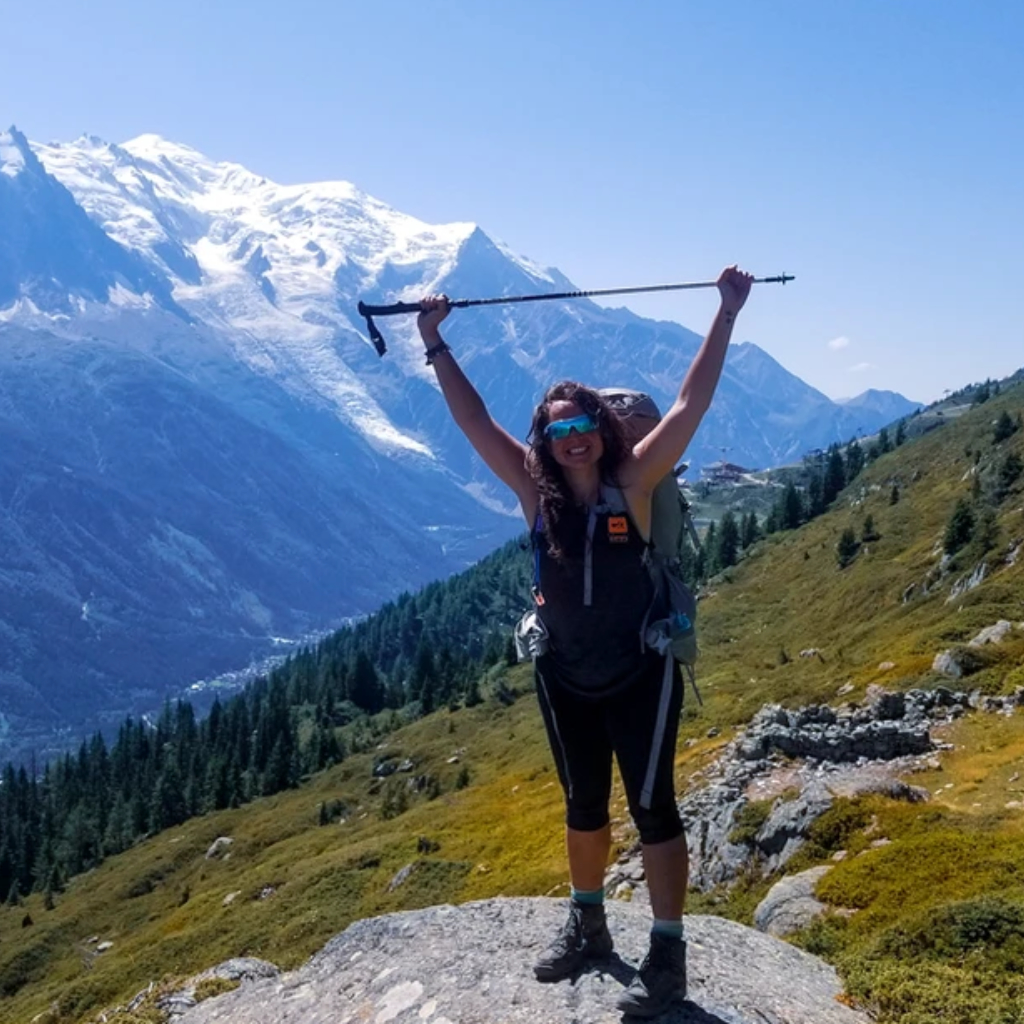
The Survival University instructor Jacks Genega hiking in the Alps.
The Dangerous Psychology of Almost There
One of the most deceptive situations in wilderness travel occurs when people believe they’re almost finished. Maybe the map shows only another mile to the trailhead, or the GPS indicates that the campsite is just over the next ridge. It sounds simple enough, so they convince themselves to keep moving. What they sometimes fail to appreciate is that one mile of difficult terrain can take considerably longer than one mile along a maintained trail.
Distance alone doesn’t tell you how difficult the remaining route will be. A steep descent, an unexpected stream crossing, thick vegetation, or a section of exposed rock can turn a short distance into a serious obstacle. Add exhaustion, darkness, wet clothing, or deteriorating weather, and what looked manageable on a map can become something entirely different. The closer people believe they are to finishing, the more tempting it becomes to underestimate those problems.
There’s also the psychological pressure of not wanting to disappoint anyone. Maybe you’re hiking with friends who are excited about reaching the destination, or you’re the person who organized the trip. You don’t want to be the one who suggests turning around, especially when everyone has worked so hard to get there. That reluctance can become particularly dangerous when several people in the group are thinking the same thing but nobody wants to speak up.
A good leader needs to be willing to make an unpopular decision when circumstances demand it. More importantly, everyone in the group should feel comfortable expressing concerns before those concerns become emergencies. If someone is exhausted, frightened, injured, or uncertain about the route, those observations deserve consideration. Ignoring them because everyone else wants to continue isn’t leadership. It’s allowing group pressure to influence decisions that should be based on actual conditions.
How to Recognize When Your Plan Is Failing
The difficult part is determining when ordinary challenges have become legitimate reasons to change direction. Wilderness travel involves uncertainty, and not every unexpected development requires abandoning your plans. A little rain doesn’t necessarily mean you need to head home, and feeling tired after several miles doesn’t automatically mean you’re in trouble. The important thing is evaluating how conditions are changing and whether you still have the equipment, skills, resources, and time to manage them safely.
Start by comparing what you expected with what you’re actually experiencing. Is the weather worse than forecast? Are you moving considerably slower than planned? Have you used more water than anticipated? Is someone developing symptoms of cold exposure, heat illness, or exhaustion? Are you still confident about your location and the route ahead? Individually, some of these problems may be manageable, but several occurring together can quickly change the situation.
Next, consider what happens if you continue and things get worse. If you push forward another hour and the weather deteriorates further, will you still have a safe way out? If darkness arrives before you reach your destination, do you have the equipment and experience to navigate or spend the night? If someone becomes unable to continue, can your group safely care for that person and summon assistance? These are questions worth answering before you commit yourself to a course of action that’s difficult to reverse.
Finally, ask yourself whether you’re continuing because the available evidence supports your decision or because you simply don’t want to give up. That’s an uncomfortable question, particularly for determined and experienced outdoorsmen. Nobody enjoys admitting that a plan isn’t working. But if the strongest argument for continuing is that you’ve already come this far, you probably need to reconsider what you’re doing.
Turning Around Isn’t Always the Safest Option
I want to make something very clear because survival advice can become dangerous when it’s reduced to simple rules. Turning around is not automatically the safest decision. There are circumstances where retracing your route could expose you to greater danger than remaining where you are or moving toward a known safe location. The correct response depends on the terrain, weather, equipment, physical condition of your group, and what you actually know about your surroundings.
Imagine you’ve crossed a stream earlier in the day, but heavy rainfall has caused the water level to rise significantly. Turning around might mean attempting to cross water that’s now moving faster and deeper than it was before. In another situation, the route behind you might cross an exposed ridge during an approaching thunderstorm. Simply reversing course without considering those hazards could make an already difficult situation considerably worse.
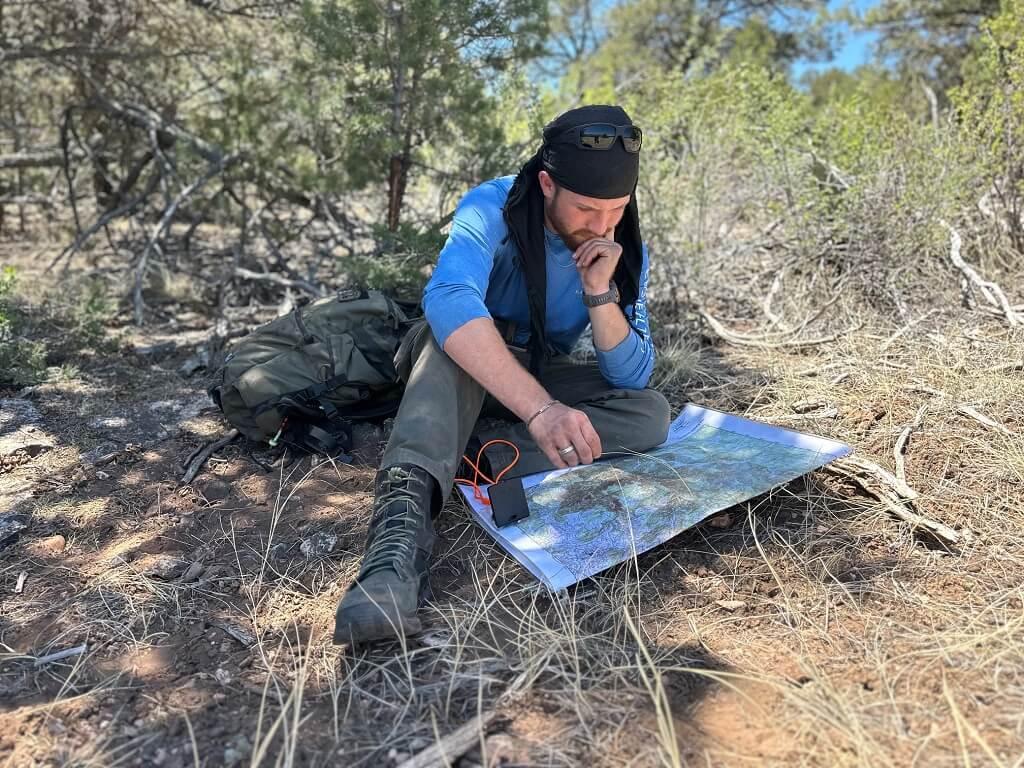
If you’re uncertain about your location or cannot identify a safe route, stop and evaluate your options before moving. Use your map, compass, GPS, or other navigation tools to establish where you are. If you’re unable to identify a safe way out, contact 911 or activate your satellite emergency communication device if you have one. Remain in a safe, visible location unless environmental conditions make staying there dangerous. Wandering around hoping to find your way out can complicate both your situation and the efforts of rescuers trying to locate you.
The objective isn’t to retreat every time something becomes difficult. It’s to recognize when the circumstances no longer support your original plan and choose the safest reasonable alternative. Sometimes that’s turning around, sometimes it’s finding shelter and waiting for conditions to improve, and sometimes it’s requesting assistance. What you shouldn’t do is continue without reassessing the situation simply because changing direction feels inconvenient or disappointing.
Make Your Decisions Before the Pressure Builds
One of the best ways to avoid poor decisions in the wilderness is to establish limits before you’re emotionally invested in reaching your destination. Before leaving the trailhead, identify the conditions that would cause you to reconsider your plans. That might include a specific turnaround time, deteriorating weather, inadequate water supplies, or a member of the group becoming unable to maintain a reasonable pace. These limits should reflect the trip, the terrain, and the capabilities of everyone involved.
A turnaround time is particularly useful because it forces you to consider the return journey rather than focusing entirely on reaching your destination. If you’ve decided that you need to begin heading back by a particular hour, reaching that time should trigger a serious reassessment. You shouldn’t automatically extend the deadline just because you’re close to the summit or someone wants another thirty minutes. Any change needs to be justified by actual conditions and the resources you have available.
It’s also worth discussing these decisions with your group before the trip begins. Make sure everyone understands that changing the plan is an acceptable outcome and that nobody will be ridiculed for identifying a legitimate safety concern. This is particularly important when you have inexperienced participants who may hesitate to speak up around stronger or more experienced hikers. Creating an environment where people can express concerns early gives you an opportunity to address problems while you still have options.
And don’t forget that your own physical and mental condition can affect your judgment. Dehydration, fatigue, cold exposure, stress, and hunger can interfere with your ability to recognize problems and make reasonable decisions. Sometimes the first indication that your plan needs to change is discovering that you’re struggling to think clearly or perform tasks that would ordinarily be simple. That’s a particularly good time to stop somewhere safe, address your immediate needs, and reevaluate what you’re doing.
Experience Doesn’t Make You Immune
I’ve been teaching wilderness survival for many years, and one thing I can tell you is that experience doesn’t make someone immune to poor decisions. In some situations, experienced outdoorsmen may actually be more willing to accept risks because they’ve successfully managed similar circumstances in the past. They remember the storms they’ve endured, the difficult terrain they’ve crossed, and the situations where perseverance paid off. Those experiences can build confidence, but confidence isn’t a substitute for evaluating the conditions in front of you.
Just because you successfully crossed a mountain pass in terrible weather five years ago doesn’t mean attempting the same thing today is a good decision. The temperature might be different, your equipment might have changed, or someone in your group might not have the physical ability to manage the conditions. Even if everything appears similar, there are no guarantees that the outcome will be the same. Previous success doesn’t eliminate the possibility of future failure.
I encourage my students to develop confidence through practice and experience, but I also want them to understand their limitations. Knowing how to build an emergency shelter doesn’t mean you should deliberately put yourself in a situation where you might need one. Knowing how to survive an unexpected night in the wilderness doesn’t mean you should ignore opportunities to avoid spending that night outside. Survival training should expand your options and improve your judgment, not give you an excuse to take unnecessary risks.
Regardless of experience, anyone can make mistakes in the wilderness. You can do everything right and still encounter circumstances beyond your control. Weather can change, equipment can fail, injuries can happen, and carefully planned routes can become impassable. The more experience you gain, the more you should appreciate the value of flexibility rather than assuming your original plan will always work.

Your Real Objective Is Getting Home
There’s a question I regularly encourage people to consider when they’re making difficult decisions in the wilderness. Why are you out there in the first place? Maybe you’re looking for adventure, challenging yourself physically, enjoying time with friends, or experiencing somewhere you’ve always wanted to visit. Those are all legitimate reasons to head into the backcountry, and I certainly understand the desire to accomplish something you’ve worked hard to achieve.
But I would argue that none of those goals should be more important than getting home safely. The summit photograph, the completed trail, and the personal satisfaction of accomplishing something difficult aren’t worth losing your life over. There’s always the possibility that you won’t get another opportunity to visit that particular destination, and I understand how disappointing that can be. Sometimes an opportunity really is once in a lifetime. That doesn’t change the consequences of making a bad decision.
One of the things I emphasize in survival training is having a reason to survive. That reason might be your children, your spouse, your friends, or simply the desire to experience everything life still has to offer. When you’re facing a difficult decision, remembering those things can help put your immediate goals into perspective. Suddenly, reaching a particular destination may not seem quite as important as making sure you get to see the people waiting for you at home.
Conditions in the wilderness can change, sometimes gradually and sometimes with very little warning. Your experience, determination, and preparation can help you deal with those changes, but they cannot eliminate every risk. Your responsibility is to recognize when circumstances have changed and respond appropriately, even when doing so means abandoning something you’ve spent months preparing to accomplish.
So the next time you’re standing on a trail, watching the weather deteriorate while someone says, “We’ve come this far, we might as well keep going,” I want you to ask yourself a different question. Is continuing actually the smartest decision, or are you allowing everything you’ve already invested to dictate what happens next? Because ultimately, the distance you’ve traveled isn’t nearly as important as whether you can safely travel the distance you have left.
What’s your reason?
About the Author
Jason Marsteiner is the founder and lead instructor at The Survival University, where he’s turned his obsession with staying alive into a mission to teach real-world survival skills. Forget fancy gear, Jason’s all about the know-how that gets you through the wild or a city crisis. A published author of Wilderness Survival Guide: Practical Skills for the Outdoor Adventurer, he’s distilled years of hard-earned wisdom into lessons anyone can use.
Raised in Colorado’s rugged mountains, Jason’s survival chops were forged in the wild—from Missouri forests to Arizona deserts to Costa Rican jungles. He’s navigated it all with next to nothing, earning creds like Wilderness First Responder (WFR) and SAR tracking along the way. He’s trained thousands to keep cool when 911’s out of reach, proving survival’s not just for grizzled adventurers, it’s for hikers, parents, and city slickers alike.
Jason’s mantra? Everyone should make it home safe. When he’s not running courses, he’s designing knives, mentoring newbies, or chilling in the city like the rest of us, always sharpening the skills that turn panic into power.
